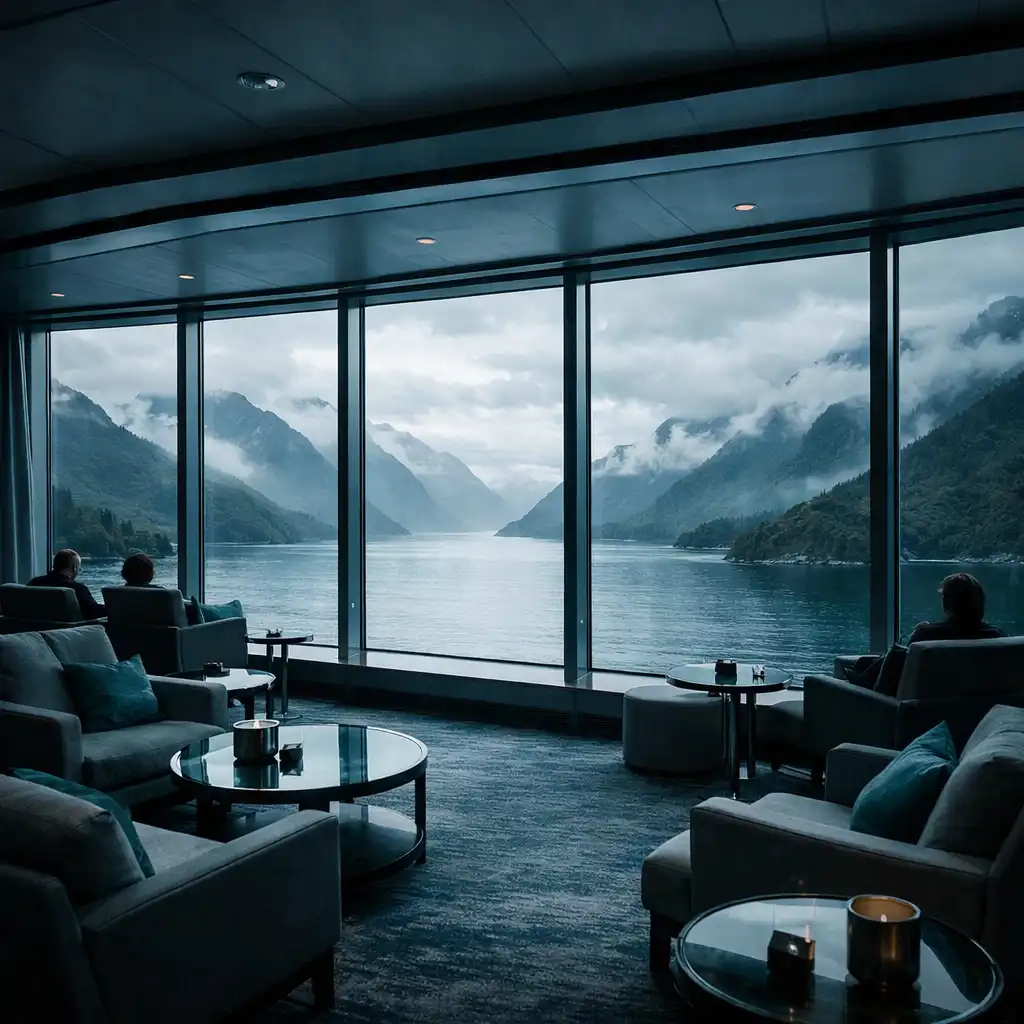
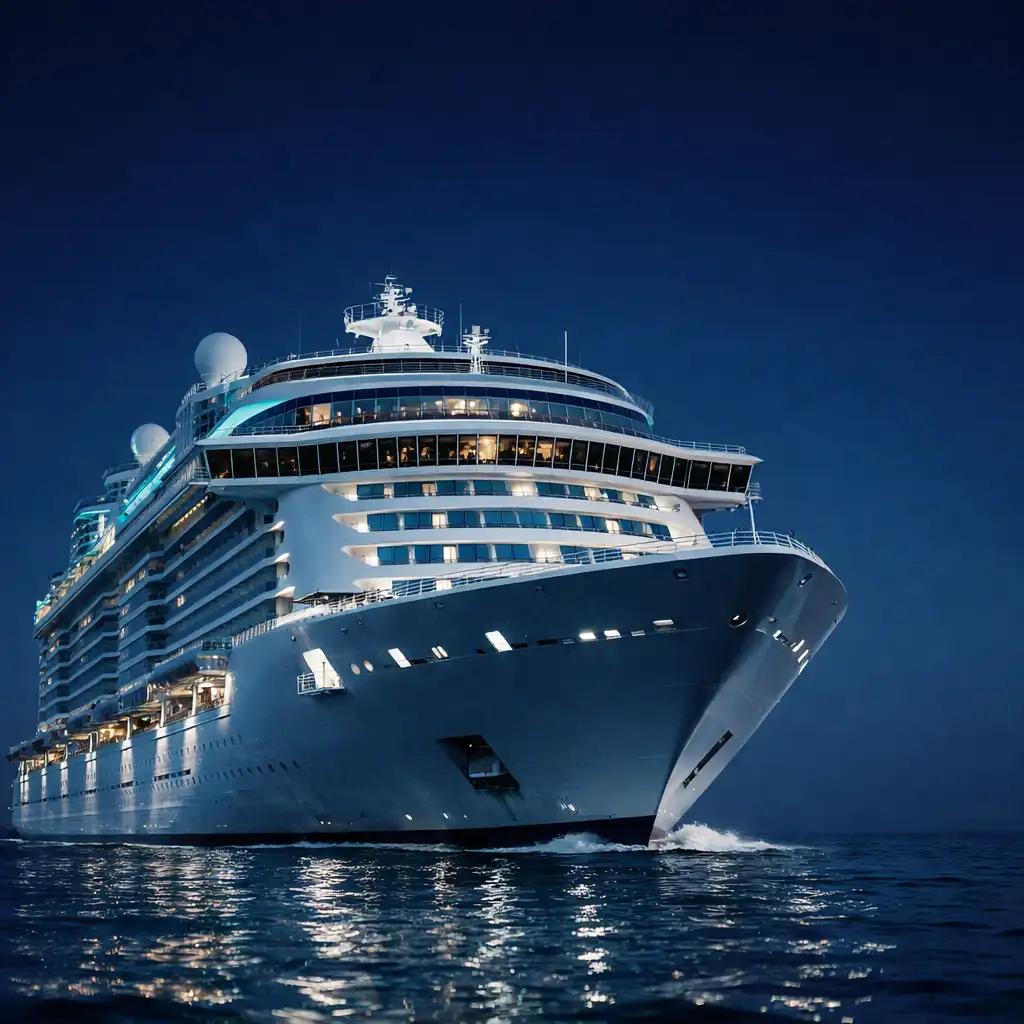
Modern cruise ship at sea with multiple illuminated decks against a deep navy twilight sky
36°51′S 174°46′E — AUCKLAND

Your Independent Guide to Ship Decks

Understand how modern cruise ships are organised, from lower crew decks to upper sun decks, so you can navigate with confidence. Ships are divided into decks with specific functions, similar to floors in a building. Deck plans show the location of cabins, dining, entertainment, and outdoor spaces. This guide focuses on ships departing from New Zealand ports like Auckland and Wellington.

Seaside Voyager is an independent guide with no official cruise line affiliation. For current itineraries, port guides, and booking, use the official New Zealand cruise destination portal.

Plan Your Voyage
SECTION 01 — DECK LITERACY

Understanding Deck Plans

A deck plan is a floor-by-floor diagram of a cruise ship, showing cabins, public venues, and outdoor areas. Deck plans are usually colour-coded by cabin category and include symbols for elevators, stairs, restrooms, and accessibility features. Understanding the plan helps you choose a cabin location that suits your needs. This guide provides general guidance only; it does not reproduce actual deck plans from any cruise line.

Key Symbols and Zones

Learn to identify common symbols for dining, entertainment, pools, and medical facilities. Symbols may vary by cruise line, but general patterns are consistent.

  • Dining venues are often marked with fork and knife icons.
  • Entertainment areas may show a stage or music note.
  • Medical centres are typically marked with a cross and located on lower decks.
  • Elevators and stairs are usually shown as small squares or arrows.
Choosing Your Cabin Location

Deck plans reveal cabin proximity to elevators, noise sources, and public areas, helping you make an informed choice. Cabins near elevators may experience more foot traffic. Lower decks can be more stable in rough seas but are often farther from amenities. Higher decks offer views but may feel more motion.

Tip: If you are sensitive to motion, consider a cabin on a lower deck near the ship's centre. If you want quick access to pools and outdoor spaces, a higher deck may suit you better.
SECTION 02 — SHIP LAYOUT

Deck-by-Deck Overview

Modern cruise ships group similar functions by deck. While exact layouts vary by ship class and cruise line, most vessels follow a broad pattern from lower operational decks to upper open-air recreation decks.

Lower Decks: Crew and Operations

Lower decks house crew quarters, engine rooms, and operational areas, usually off-limits to passengers. These decks are essential for ship operations but rarely seen by guests. Medical facilities are often located on a lower passenger deck for accessibility.

Main Decks: Dining and Entertainment

Main decks typically feature main dining rooms, theatres, casinos, and lounges, forming the social heart of the ship. Main dining rooms are often two or three decks high. Theatres may span multiple decks with balcony seating. Casinos are usually located near other entertainment venues. Casino age restriction: 18+ and responsible gambling standards apply.

Upper Decks: Pools and Recreation

Upper decks feature pools, sun decks, sports courts, and outdoor bars, offering open-air relaxation and activities. Pools may be heated or covered depending on the ship and itinerary. Sun decks often have loungers and shaded areas. Sports courts may include basketball, mini-golf, or jogging tracks. Amenities vary by ship and cruise line.

SECTION 03 — WAYFINDING

Navigating the Ship

Signage and Wayfinding

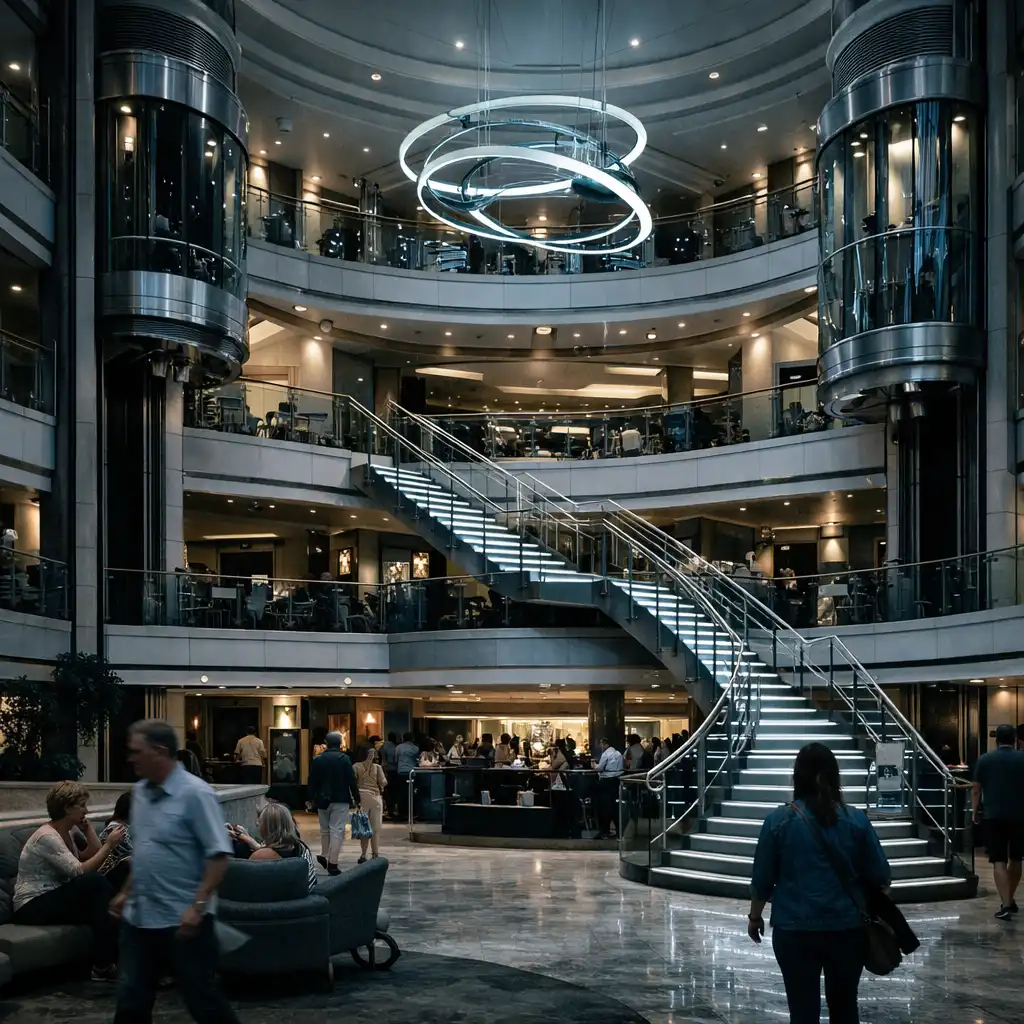
Ships use clear signage with deck numbers and directional arrows; familiarising yourself with the layout early helps. Elevator lobbies often have deck plans and 'you are here' markers. Colour-coded carpets or wall art can indicate different zones. Most ships have a central atrium or lobby that serves as a landmark.

  • Study the deck plan near your cabin on the first day.
  • Note which stairwell or elevator bank is closest to your cabin.
  • Use the central atrium as a reference point when returning from different areas.

Using Elevators and Stairs

Elevators can be busy during peak times; using stairs is often quicker and provides exercise. Peak times include embarkation, meal times, and show endings. Stairwells are usually located near elevator banks. Accessible elevators are available for those with mobility needs, though accessibility features vary by ship.

Tip: If you are able, take the stairs for short trips of one or two decks. It helps you learn the ship's layout and avoids crowded elevators.
SECTION 04 — ACCESSIBILITY

Accessibility and Mobility

Accessible Cabins and Facilities

Modern ships offer accessible cabins with wider doorways, roll-in showers, and grab bars, but availability is limited. Accessible cabins should be booked early as they are in high demand. Public areas are generally wheelchair accessible with ramps and elevators. Some ships have pool lifts and accessible restrooms.

  • Wider doorways and turning space in accessible cabins
  • Roll-in showers with grab bars and shower seats
  • Ramps and elevators serving public decks
  • Accessible restrooms in main public areas

Planning for Mobility Needs

If you have mobility concerns, request a cabin near elevators and review deck plans for accessible routes. Consider the distance from your cabin to dining and entertainment venues. Some ships have accessible shore excursion options. Contact the cruise line in advance to discuss specific needs.

Important: Always confirm accessibility details directly with the cruise line before booking. This guide does not provide medical advice.
SECTION 05 — DESIGN & COMFORT

Ship Design and Comfort

Stability and Motion

Modern ships use stabilisers to reduce rolling, but motion can still be felt, especially in rough seas. Lower and central cabins experience less motion. Stabilisers are most effective at cruising speed. Itineraries in Fiordland and Marlborough Sounds may have calmer waters. Motion sickness remedies are available onboard.

Noise Considerations

Cabin location relative to public areas can affect noise levels; avoid cabins under pool decks or near nightclubs. Cabins under the pool deck may hear chair scraping in the morning. Cabins near elevator lobbies may have more foot traffic noise. Higher decks near outdoor venues can be noisy at night. Noise levels vary by ship and location.

Tip: Bring earplugs as a precaution, especially if your cabin is near a high-traffic area.

Climate Control and Ventilation

Modern ships have effective climate control, but cabins in certain locations may be warmer or cooler. Cabins with balconies can be opened for fresh air. Interior cabins rely on air conditioning. Some ships have individually controlled thermostats. Climate control systems vary by ship.

SECTION 07 — OUTDOOR SPACES

Outdoor Decks and Pools

Pool Areas

Most ships have at least one main pool, often with hot tubs, and may have adult-only or family zones. Pool areas can be crowded on sea days; arrive early for loungers. Some ships have retractable roofs for all-weather use. Towels are usually provided on deck. Pool features vary by ship.

Sports and Recreation

Outdoor sports facilities may include basketball courts, mini-golf, jogging tracks, and rock climbing walls. Equipment is usually provided free of charge. Some activities may require signing a waiver. Hours of operation vary and are listed in the daily program. Available facilities depend on the ship.

SECTION 08 — CASINO DECKS

Casino Decks and Responsible Gaming

Casino Locations and Atmosphere

Casinos are typically located on lower public decks near theatres and lounges, and are only open while at sea. Casinos are usually closed while in port. They offer slot machines, table games, and sometimes poker rooms. Dress codes are generally casual. Casino age restriction: 18+. Responsible gambling standards apply.

Responsible Gaming

Cruise ship casinos promote responsible gambling, with limits and self-exclusion options available. Set a budget before playing and stick to it. Take regular breaks and avoid chasing losses. Staff are trained to assist with responsible gaming concerns. Age restriction: 18+. Responsible gambling standards are enforced.

SECTION 09 — NZ PLANNING

Planning Your Cruise from New Zealand

Embarkation Day Tips

Arrive at the port early, have your documents ready, and be prepared for security screening. Embarkation procedures vary by cruise line and port.

  • Check-in typically opens several hours before departure.
  • Have your passport, boarding pass, and any required visas ready.
  • Luggage is usually checked at the terminal and delivered to your cabin.

Itinerary Considerations

New Zealand cruises often include Fiordland, Marlborough Sounds, and South Pacific islands, each with unique scenic highlights. Itineraries vary by cruise line and season.

  • Fiordland offers dramatic fjords and waterfalls.
  • Marlborough Sounds features sheltered waterways and wildlife.
  • South Pacific itineraries may include tropical islands and beaches.

Booking Through Official Channels

For the most accurate information and booking options, visit the official New Zealand cruise destination portal. The portal provides up-to-date cruise schedules and port guides. Booking through official channels ensures transparency and support.

Explore Cruise Itineraries
SECTION 10 — FAQ

Frequently Asked Questions

Ready to Set Sail?

Visit the official New Zealand cruise destination portal for up-to-date itineraries, port guides, and booking options. The portal is the authoritative source for cruise travel in New Zealand and provides comprehensive information for planning your voyage.

Explore Cruise Options